Gaëtane Grange-Knopp: what our homes reveal about us
Space designer and somato-psycho-educator, Gaëtane Grange-Knopp explores how our interiors tell our stories and our intimate blockages.
What Our Walls Know About Us
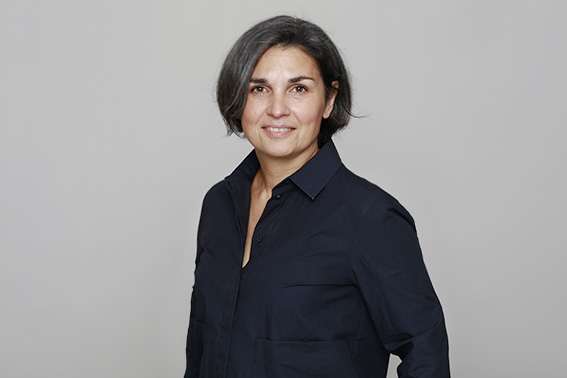
Space designer, coach, and somato-psychopedagogue, Gaëtane Grange-Knopp has been exploring the intimate link between our interiors and our life stories for fifteen years. Founder from The Conscious Home and author from The house, this great living body (Éditions L’Harmattan), it decodes how our walls silently tell the story of our impulses, our blockages, and our transformations.
How would you define your profession and your approach?

I define myself as an alchemist of dwelling. I like this formula because it goes beyond simply supporting personal or professional transformations through places.
I am working from two complementary readings. The first is horizontal, a 360-degree view: how the built structure is organized, how the light enters, how the uses unfold. The second one is vertical. It invites me to delve into what the house carries within itself: from its roots, its history—sometimes transgenerational, all the way to the house dreamed of or imagined by its inhabitants.
I never work solely on the material aspect. Feeling, emotion, the symbolic, and the spiritual are an integral part of my approach.
Why does the home play such an important role in our lives?
Because it is the primary condition of our humanity. Originally, we build a shelter to protect ourselves from the outside. This shelter delineates what belongs to the outside and what belongs to the inside. This envelope provides an anchor point from which we can rest and recharge, before heading back out into the world. We are social beings: this recovery time only makes sense if it subsequently allows us to reconnect with others.
This place has changed a lot. For centuries, our homes were only used for sleeping and eating: we lived mostly outside, in social connection. For the past few decades, we have been witnessing a reverse movement, sometimes pushed to the extreme. Delivered groceries, teleworking, meals at home: our houses are turning into almost airtight cocoons, as if the outside had become a source of danger.
I deeply believe we need both: feeling at home, of course, but to better set out toward others.
What can an interior reveal about our personal or family history?
Many things, but I always remain vigilant not to fall into wild interpretation. I never rely on an isolated element: it is the multiplicity of clues, put in relation with the story told and the speech, that makes sense.
For example, I have supported clients who could no longer move forward in their lives. They lived in what I called a uterine house: a secluded home at the end of a dead end, invisible from the outside. This choice had originally been deeply protective, as they had just had twins after several years of difficulties. But having become entrepreneurs working from home, they found themselves unable to go out, to show themselves, to be seen. The day we identified this mechanism, the female client was deeply moved: she expressed a need to be born. They ended up leaving this house, which was nevertheless very successful, after eight years. This moreover corresponds to a rather classic life cycle, which I estimate to be between seven and ten years.
When you enter a place, what do you observe first?

I always start with the immediate environment: the neighborhood, the street name, the building, the floor... We are in resonance with our environment, even when we think we live in a vacuum.
Once in the space, I observe the general structure, the layout of the rooms, the light, the orientation. I also look at what the inhabitants have chosen to highlight. A disproportionate amount of space given to common areas, a bedroom much larger than the others: all of this tells the story of how a family unfolds within its home.
I also observe how the person shows me around their interior: do they start with the room they prefer, or do they take me directly to where the problem lies? This tour is already a first narrative. To this, I add attention to the body: the speed of movement, hesitations, and changes in tone often say much more than words.
Next come the objects. I distinguish three types: those that carry a personal history, such as a collection brought back from travels; those that carry family memory, sometimes inherited out of loyalty rather than choice; and purely functional objects, which are interesting especially when they multiply to the point of becoming a collection.
I once worked with a person who lived surrounded solely by mementos of her deceased parents, in a home that almost resembled a mausoleum. Her partner had confided in me that he felt as though he were living with an entire lineage. We worked, item by item, to identify what she truly loved. This process of decluttering allowed her to make genuine room for her partner and to continue, together, building a shared future.
What are the signs that a home is no longer fully playing its role as a refuge?
The first sign is a difficulty that one feels without knowing how to name it: one feels less at ease at home. The body speaks before words. The stomach knots, the intestines make themselves felt, a form of vertigo or fatigue sets in: these are all pieces of information we receive even before the brain translates them. Being attuned to these signals is already obtaining a first indication of the unease
Next, it is necessary to identify precisely where the problem comes from. Does it stem from the organization of the place itself, or from the relationship we maintain with this space, or even with its immediate environment? Is the disruption structural, or merely circumstantial, linked to a period in life that means the place no longer meets our needs for a time? A room that we avoid speaks volumes: for example, a bedroom often relates to intimacy, an office to the relationship one has with one's work.
Once this origin has been identified, we can work on the transformation.
What simple gestures help you find a sense of refuge at home?
The first step is to trust your body rather than trying to understand everything intellectually. You just have to experience it: where does my body feel good in this space? This information, simple as it may be, then makes it possible to reorganize the place to regain a feeling of support.
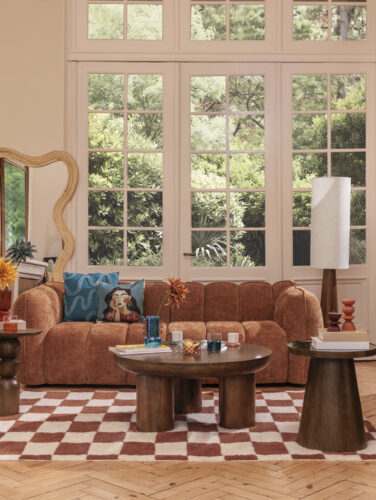
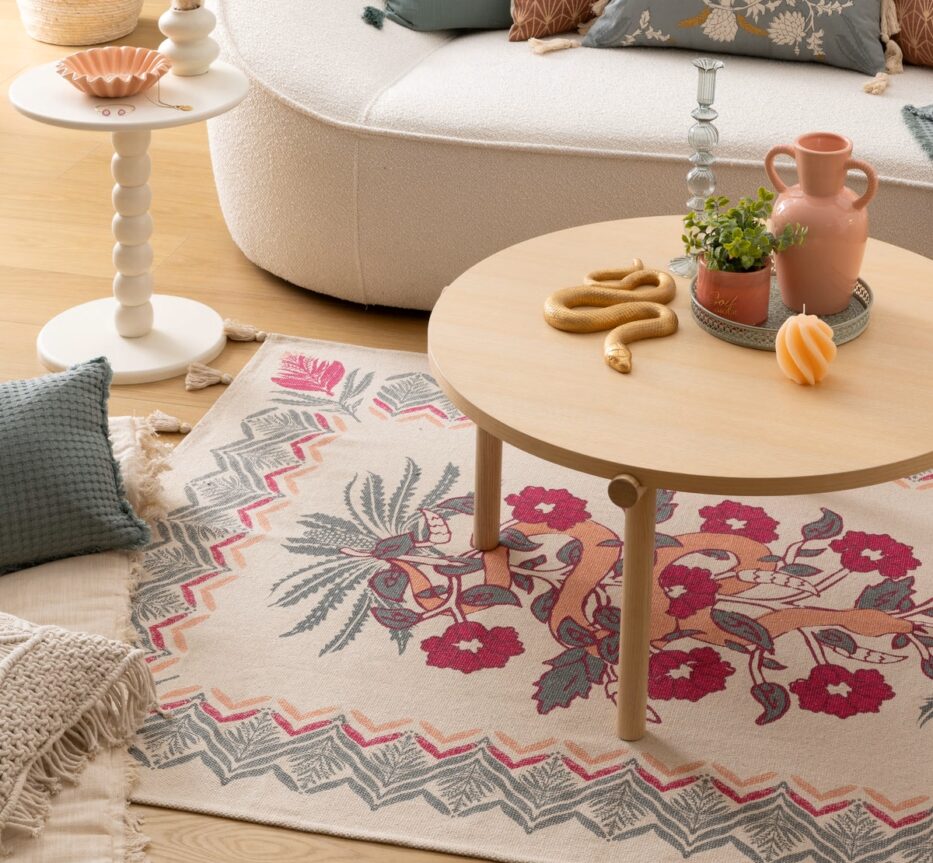
Other even simpler gestures can suffice: laying down a rug to create a sense of grounding in a living room where things just won't come together, adding warm cushions, or rethinking the arrangement of seating.
Is the question of organization just as essential?
I distinguish between creative disorder and structural disorder. A messy workshop might not be a problem if it nourishes a creative mind: the person draws from it, builds within it. It is different when disorder invades the entire house. This often signals exhaustion, sometimes a form of hidden depression, and deserves real attention. Conversely, total minimalism can reflect a need to control everything, a difficulty in leaving room for the unexpected. As always, it is all a matter of balance.
One final piece of advice for anyone questioning their relationship with their home?
When a sense of unease sets in, you must first check whether it is linked to a specific event: a bereavement, a separation, an illness, a career change, a new stage of life. This helps to understand why this unease appears and how to intervene beforehand. Just because the home is not the origin of a difficulty does not mean it cannot act to soothe it. The place and the inhabitant function as mirrors: acting on one always influences the other.