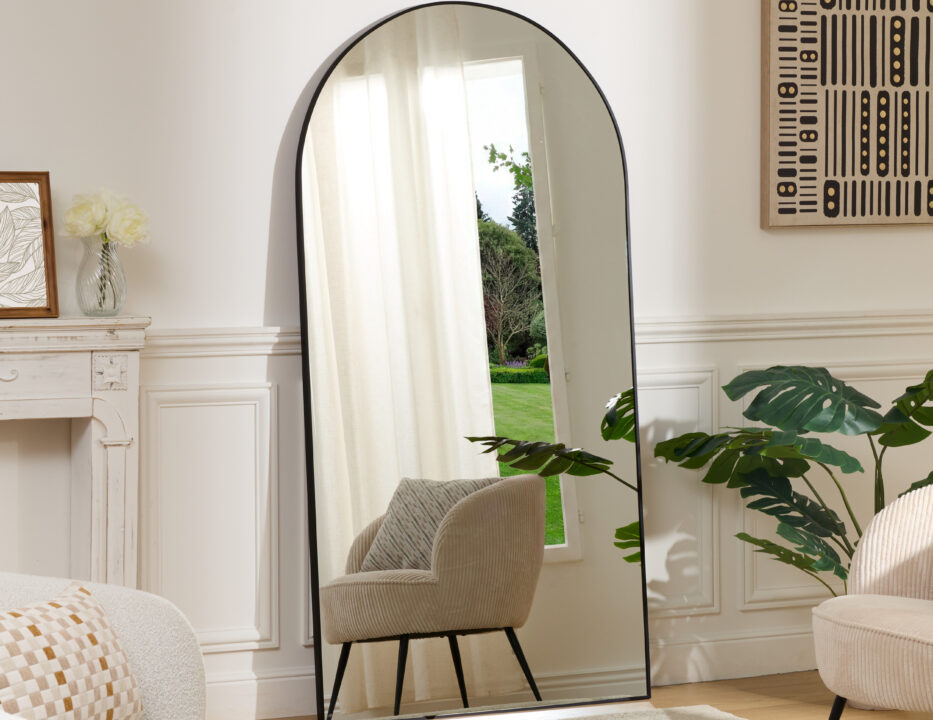
Large black arched floor mirror in a contemporary living room with a beige armchair and a green plant.

An object of function par excellence, the mirror has long since earned its stripes in terms of design. It enlarges, illuminates, and plays with spaces. In the hands of an interior decorator, it becomes a stylistic asset – with its own rules for selection, placement, and staging. Here’s how to approach it in all its depth, both indoors and outdoors. 

In the beginning was the form 

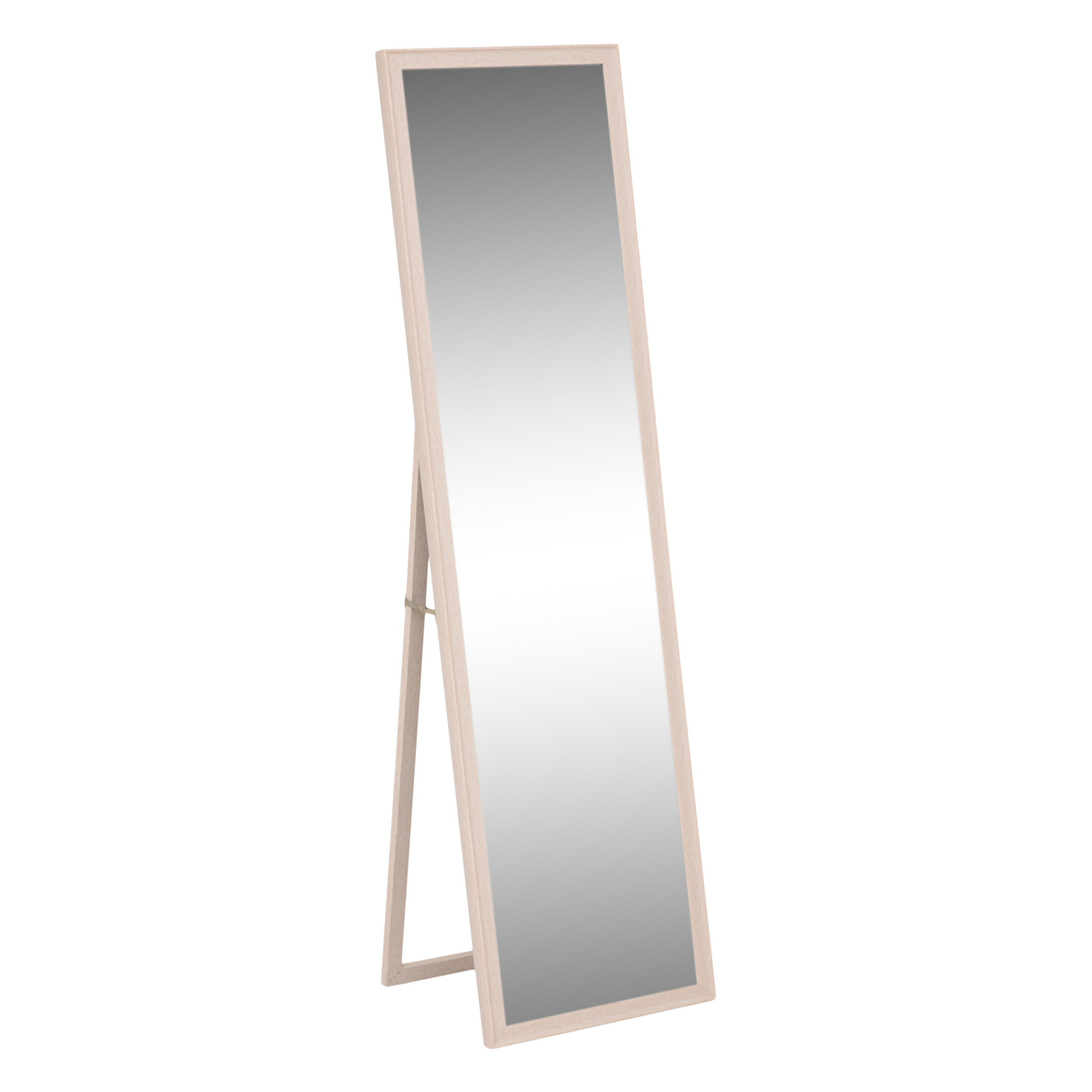
Everything is a question of contour first. A mirror Round or oval Softens a room with clean lines, adding a touch of organic to a contemporary interior. A arch mirror introduces an architectural flair without weighing down the space. A rectangular format, with generous proportions, plays the card of classic elegance and adapts to almost any context. 

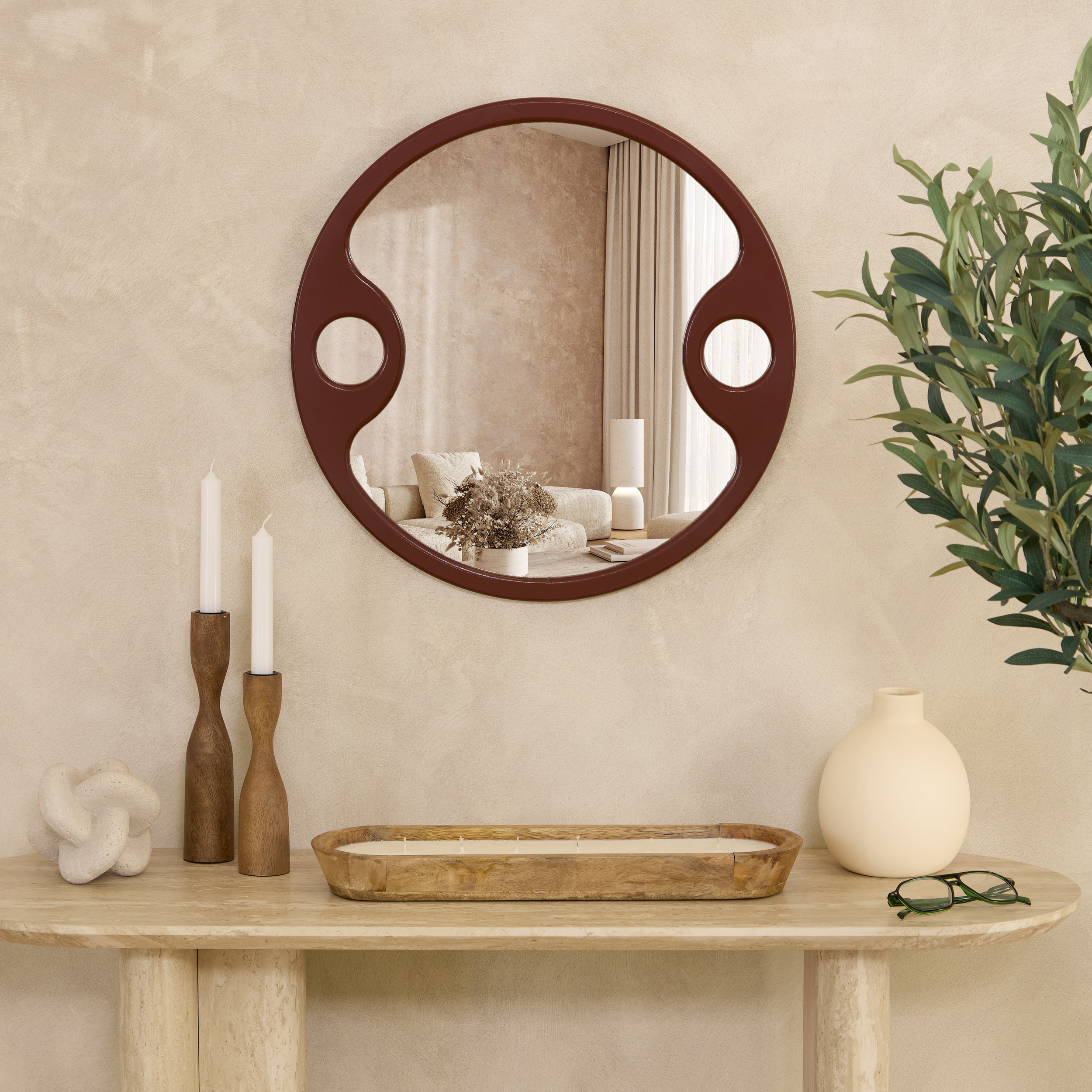
Whatever the model, one rule remains: the shape of the mirror should resonate with its surroundings, not repeat them. In a living room with rectilinear furniture, a round mirror creates an interesting tension; in an entryway already rich in curves, a clean and assertive format would be preferred. 

Round terracotta design mirror above a stone console in a warm contemporary decor
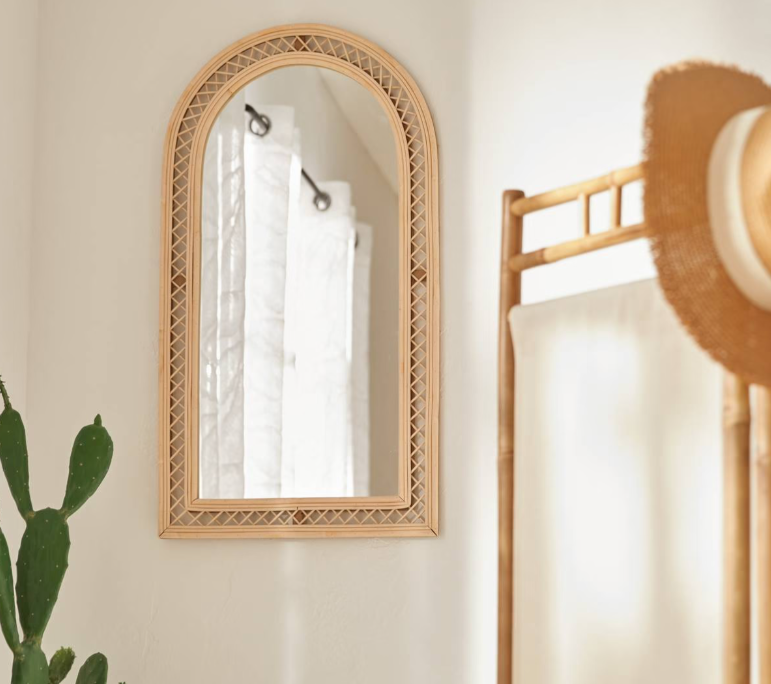
Bohemian entryway with rattan arc mirror, bamboo coat rack, and cactus

The finish, a proof of character 

The frame—or its absence—says a lot about an interior's identity. Brushed metal (gold, matte black, bronze) adds warmth and character without being ostentatious. Natural wood or rattan, on the other hand, anchors the mirror in a cozier atmosphere, perfect for a bohemian or Scandinavian interior. Frameless? The beveled edge of a naked mirror remains a safe bet for minimalist spaces. 

Every mirror deserves consideration: a finish should be selected in keeping with the other materials in the room. A framed mirror, for example, may be enough to bring the touch of character a white room needs. 

 The wall composition, to go further 

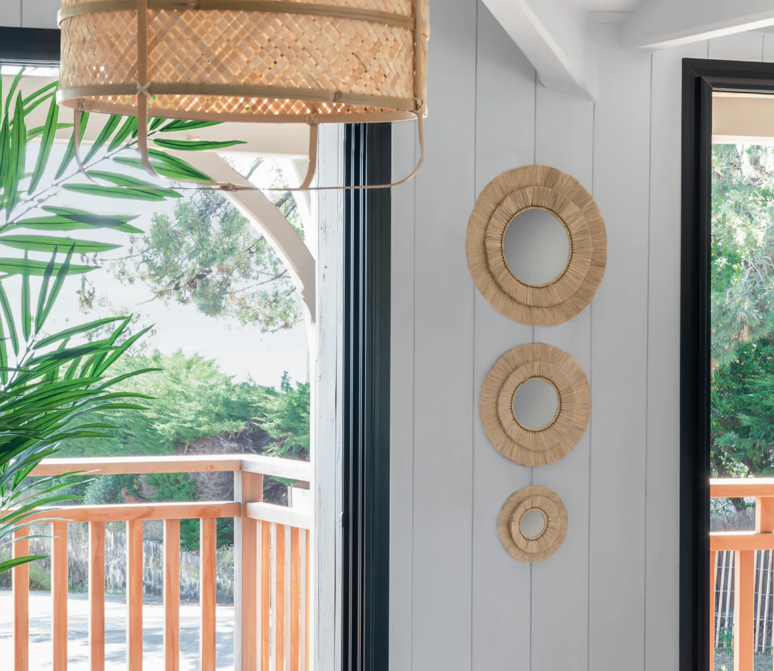
A single mirror, if chosen well, always finds its place; several mirrors, and another dimension opens up. Cluster compositions – two, three, or even five mirrors combined into a «mirror wall» – are enough to give any wall a touch of artistic installation.  

The tip: vary sizes and shapes, but maintain a consistent finish so that the whole remains legible. The idea is not to mix five different universes, but to play on a common theme with subtle variations. 

Composition of three sun mirrors in natural fibers on a wall in a bright bohemian decor

The garden mirror, the asset of summer 

«Through the looking-glass,» as Alice would say, lies an unexpected ally: the outdoor mirror, capable of transforming a terrace or garden. Positioned against a wall or fence, amidst vegetation or at the back of a terrace, it gives depth to a sometimes limited space and captures the low-lying lights of late afternoon, the kind that make summer evenings so charming. 

Consider the orientation: facing the sun, the effect can be blinding. It is best to opt for a north or east exposure, or a partially shaded location. Also, make sure the chosen model is designed for outdoor use, as it must be resistant to humidity and temperature variations.